This Miso Soup Recipe is the ultimate Japanese soul food, delivering a restaurant-quality experience right in your own kitchen. If you have ever marveled at the cloudy, dark amber dashi broth served in traditional Japanese eateries, you are about to master that exact technique. This isn’t just a side dish; it is a nutrient-dense, savory masterpiece that balances the delicate texture of cubed white silken tofu with the mineral-rich bite of rehydrated dark green wakame seaweed.
Whether you are looking for a light lunch or a cleansing starter, this authentic preparation focuses on the “umami” foundation that makes Japanese cuisine world-renowned. By following this Miso Soup Recipe, you will learn the crucial “don’t boil the miso” rule that preserves both flavor and probiotics. Get ready to enjoy a steaming bowl garnished with sliced fresh green scallions that look just as beautiful as they taste.
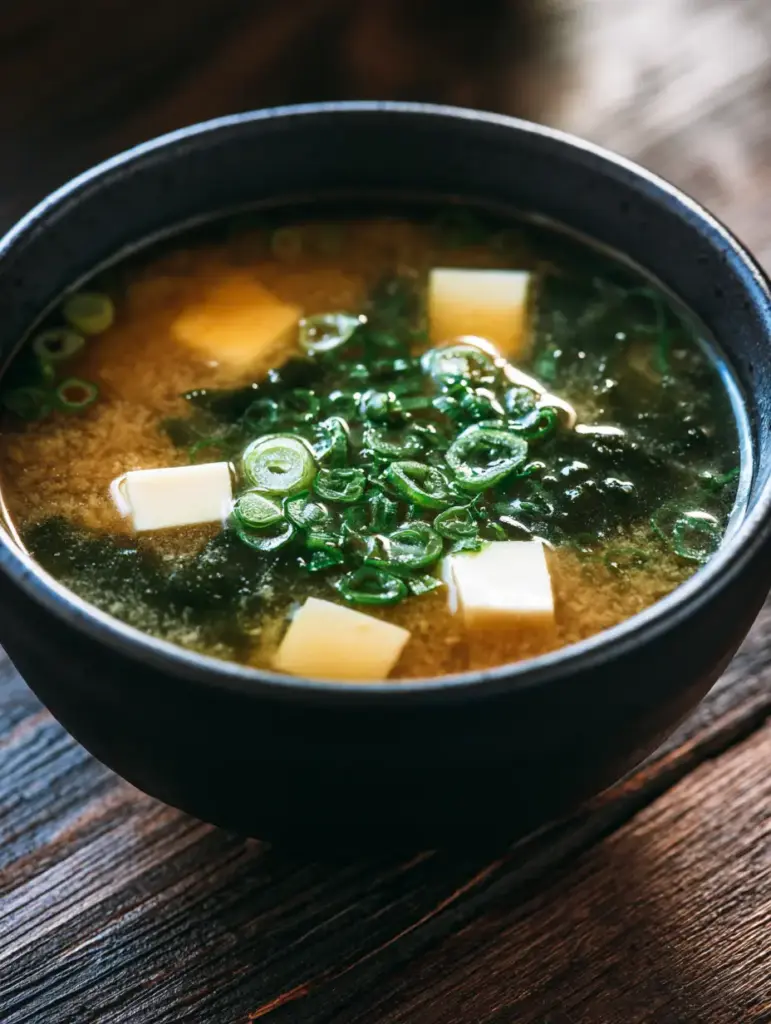
Why You Will Love This Authentic Umami Bowl
- Visual Depth: The dark amber dashi broth provides a stunning, moody backdrop for the vibrant ingredients.
- Texture Contrast: You get the melt-in-your-mouth feel of white silken tofu paired with the slight snap of dark green wakame.
- Cloudy Perfection: We teach you how to achieve that signature “suspension” of cloudy miso paste that swirls beautifully in the bowl.
- Speed & Health: This recipe comes together in under 15 minutes and is packed with fermented goodness.
If you enjoy Japanese-inspired flavors, you might also love my homemade ramen recipe for a heartier noodle fix later this week.
The Essential Ingredients for Miso Perfection
To achieve the Visual Recipe Blueprint we are aiming for, each ingredient serves a specific culinary and aesthetic purpose. Here is what you need to gather:
1. The Dashi (Stock Base): 4 cups (950ml) of water plus dashi granules (or homemade kombu/katsuobushi stock). This creates the dark amber foundation of the soup.
2. Miso Paste: 3-4 tablespoons (45-60ml) of high-quality miso. Use Awase (a blend) for a balanced flavor or Aka (red) miso for a deeper, bolder cloudy suspension.
3. Silken Tofu: 7 oz (200g) of white silken tofu. We use silken because its delicate, custard-like texture is traditional for miso soup, unlike firm tofu which can feel too rubbery here.
4. Dried Wakame Seaweed: 1 tablespoon (15ml) of dried seaweed. Once rehydrated, it transforms into dark green wakame ribbons that add an oceanic depth.
5. Fresh Scallions: 2 stalks of sliced fresh green scallions. These provide the essential bright green pop and a sharp, fresh finish to the savory broth.
For those who love a cozy liquid meal, this pairs excellently with a side of lasagna soup style garlic bread or even some butter swim biscuits for a fusion twist.
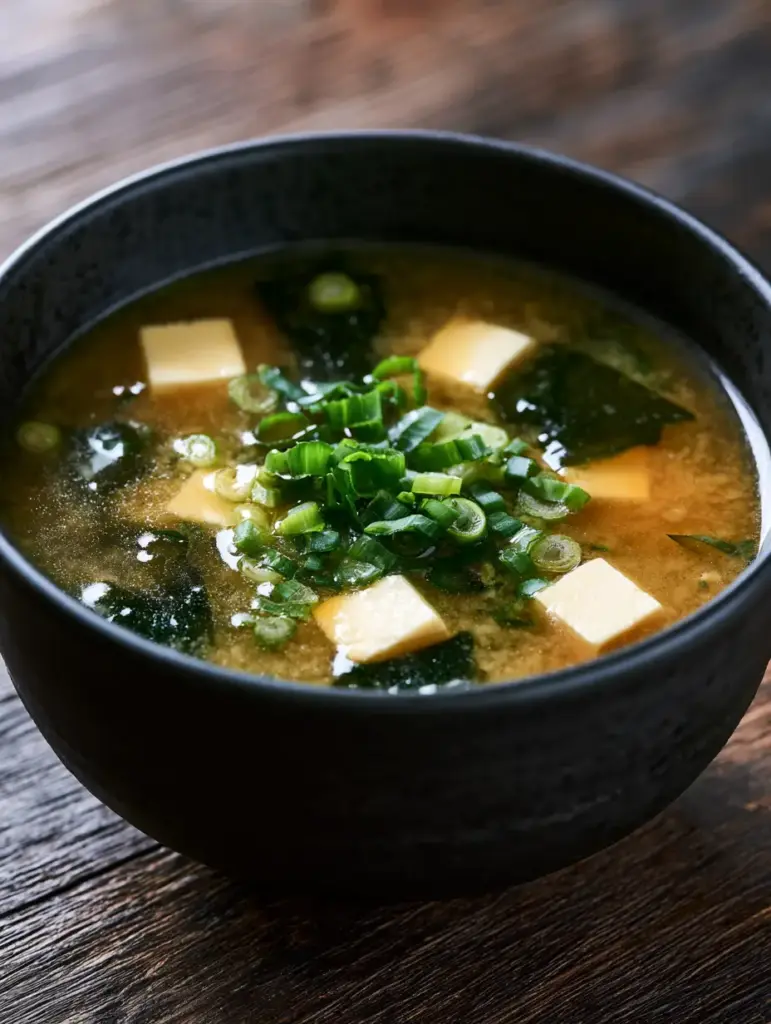
How to Make the Ultimate Miso Soup Recipe
Success lies in the temperature control. High heat is the enemy of delicate miso proteins. Follow these steps for a professional result.
Step 1: Rehydrate the Wakame
Place your dried seaweed in a small bowl of water for about 5 minutes. Watch as the shriveled bits expand into dark green wakame seaweed. Drain and set aside. Preparing this separately ensures the seaweed doesn’t overcook and become slimy in the main pot.
Step 2: Prepare the Dashi Base
In a medium saucepan, bring 4 cups (950ml) of water to a boil. Add your dashi powder or stock bag. Reduce heat to a simmer. You want a dark amber dashi broth that is clear but rich in color. The smell should be slightly smoky and briny.
Step 3: The Tofu Transformation
Carefully slice your white silken tofu into uniform 1/2-inch cubes. Because silken tofu is fragile, handle it with care. Gently slide the cubes into the simmering dashi. Let them warm through for 1-2 minutes. You will see the white cubes bobbing in the dark amber liquid.
Step 4: Incorporating the Miso (The Secret Step)
Place your miso paste into a small fine-mesh strainer. Submerge the bottom of the strainer into the hot dashi and use a spoon to whisk the paste into the liquid. This prevents clumps and creates that perfect cloudy miso paste suspension. DO NOT let the soup come to a rolling boil after the miso is added, as this destroys the delicate flavor profile.
Step 5: Final Garnish and Serve
Add the rehydrated wakame to the pot. Ladle the soup into matte black ceramic bowls. Immediately before serving, scatter a generous amount of sliced fresh green scallions and spring onion rings over the surface. The bright green against the cloudy, dark amber broth is the hallmark of a perfect Miso Soup Recipe.
Expert Tips for Success
- Quality Miso Matters: Since miso is the star, don’t settle for the cheapest tub. Look for organic, fermented miso for the best savory miso paste flavor.
- The Strainer Trick: Always dissolve the miso through a sieve. Adding a glob of paste directly to the pot results in salty clumps that ruin the texture.
- Temperature Control: If the soup starts to boil after adding the miso, the aromatics will evaporate and the probiotics will die. Keep it at a gentle steaming point.
- Silken vs. Firm: While you can use firm tofu, the cubed white silken tofu creates a much more authentic mouthfeel that contrasts beautifully with the broth.
If you’re serving this as part of a larger meal, consider adding some roasted brussels sprouts for a crunchy side dish contrast.
Storage, Reheating & Freezing
To Store: Miso soup is best enjoyed fresh. However, you can store leftovers in an airtight container in the fridge for up to 2 days. The cloudy miso paste will settle at the bottom; simply stir before reheating.
To Reheat: Warm the soup in a small pot over low heat. Again, do not bring it to a boil. Heat until just steaming.
Freezing: We do not recommend freezing miso soup. The texture of the white silken tofu becomes spongy and porous once frozen and thawed, losing its characteristic silkiness.
What to Serve With This Miso Soup Recipe
This soup is incredibly versatile. For a complete Japanese-themed dinner, serve it alongside a bowl of steamed rice and some grilled fish. If you want to keep the “comfort food” vibes going, it pairs surprisingly well with creamy garlic shrimp pasta for a surf-and-turf experience. The salty, umami notes of the Miso Soup Recipe cleanse the palate between bites of rich, creamy dishes.
Frequently Asked Questions
You should never boil the soup after adding the miso paste. Boiling destroys the delicate aromatic compounds and the beneficial probiotics found in fermented miso.
Traditional dashi contains bonito flakes (fish). To make this recipe vegan, ensure you use a kombu-only dashi (dried kelp) or a vegan dashi powder.
Awase miso (a blend of red and white) is best for a balanced flavor. White miso is sweeter and milder, while red miso is saltier and deeper.
The cloudy appearance is a sign of quality! Miso is a suspension of fermented particles. In a proper dashi base, these particles swirl to create a beautiful cloudy effect.
The Final Masterpiece: Miso Soup Recipe Card
Ready to create the perfect cloudy, dark amber dashi broth? Follow the exact measurements below for the most authentic experience.
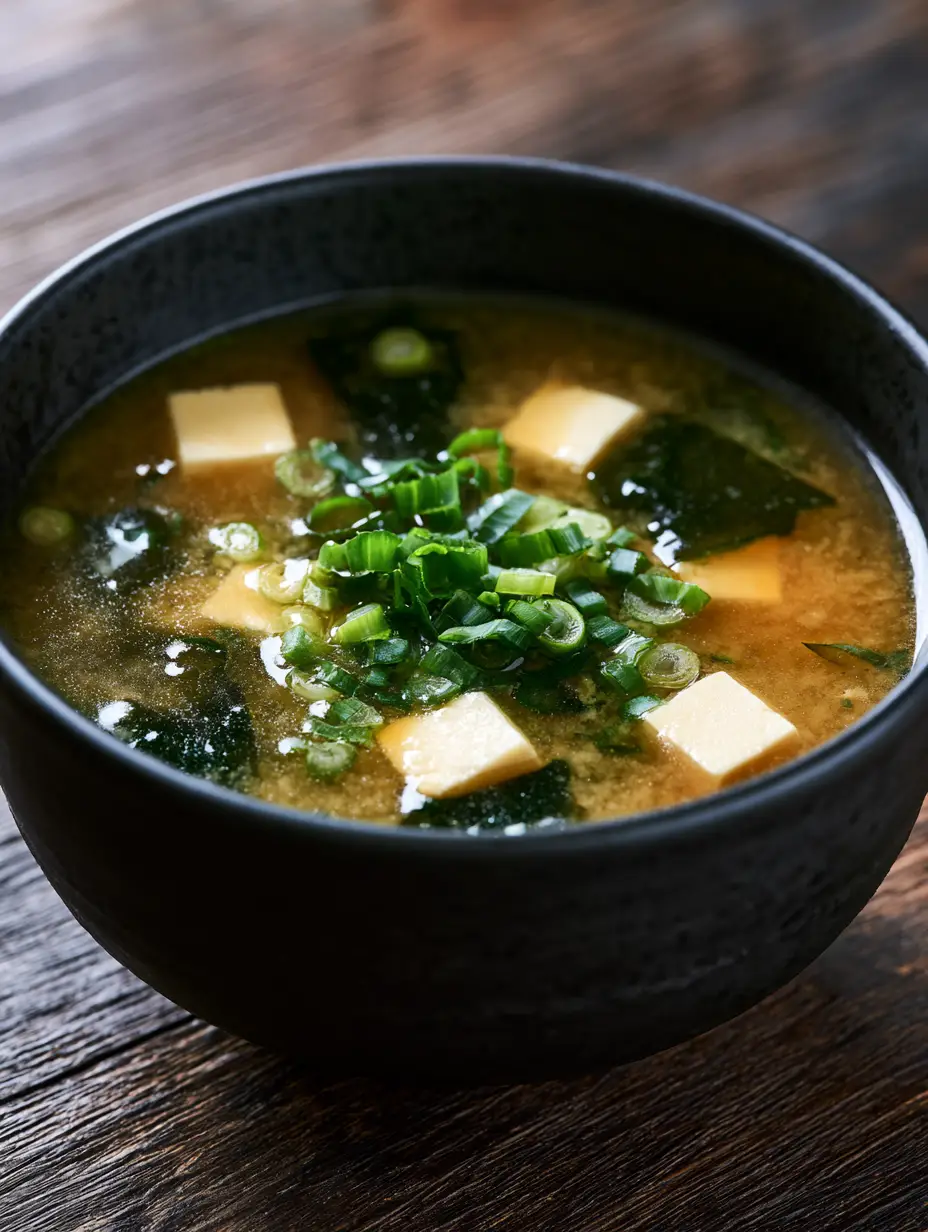
Miso Soup Recipe: The Authentic 15-Minute Japanese Comfort Bowl
Ingredients
Equipment
Method
- Soak dried wakame in water for 5 minutes until it becomes dark green and soft. Drain.
- Bring dashi to a boil in a saucepan, then reduce to a low simmer.
- Gently add the cubed silken tofu and simmer for 2 minutes.
- Place miso paste in a strainer and whisk it into the broth until cloudy. Do not boil.
- Add wakame and scallions, then serve immediately in bowls.
Notes
Use silken tofu for the most authentic delicate texture.
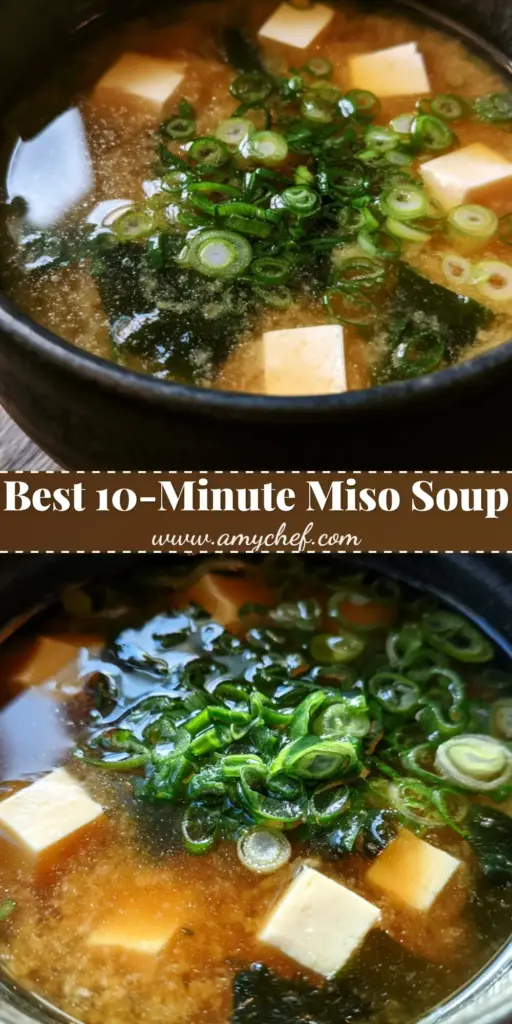
Save This Recipe to Pinterest!
Did you love the cloudy suspension and savory miso paste in this bowl? Make sure to save this Miso Soup Recipe to your Pinterest boards so you never lose it! Follow @amy_chef for more authentic Japanese recipes and comfort food classics. If you made this, snap a photo of your matte black ceramic bowl and share it in the comments below—I’d love to see your garnishing skills! Don’t forget to leave a 5-star rating if this is now your go-to recipe!